
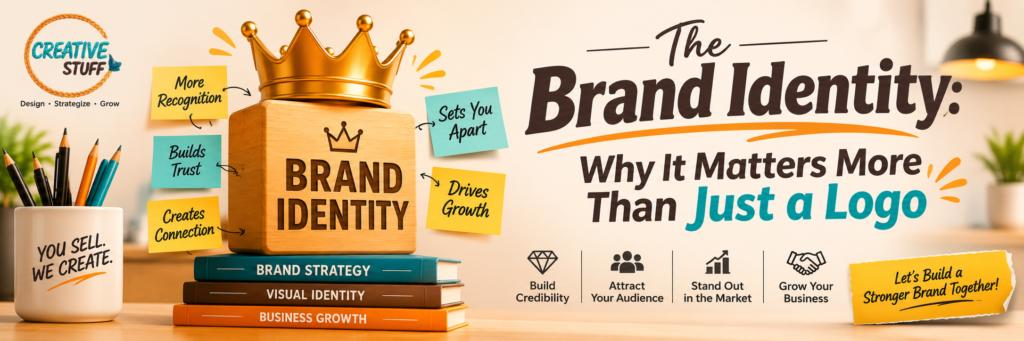
Think about the brands you recognise instantly. You might remember their logo, colours, packaging, advertisements, or even the way they communicate with customers. These familiar elements are not random design choices. They are part of a carefully developed brand identity.
For any business, the brand identity represents how it wants to be recognised, understood, and remembered by its audience. It brings together visual elements, communication style, values, and personality to create a consistent impression.
Whether you are starting a new business or managing an established company, building a clear brand identity can help you stand out in a competitive market and create meaningful connections with customers.
What Is a Brand Identity?
A brand identity is the combination of elements a business uses to present itself to the world. It includes both visual and verbal components that communicate what the brand represents.
Visual elements include the logo, colours, typography, imagery, packaging, and overall design style. Verbal elements include the brand’s tone of voice, messaging, language, and communication approach.
For example, a premium hospitality brand may use elegant typography, subtle colours, high-quality photography, and refined language. A children’s activity brand might use bright colours, playful illustrations, and friendly communication.
Both brands may offer excellent services, but their identities communicate different personalities and appeal to different audiences.
In simple terms, brand identity is how a business intentionally presents itself across every interaction with its audience.
Brand Identity vs Brand Image: What Is the Difference?
These two terms are often used interchangeably, but they describe different things.
Brand identity is how a business wants to present itself. It is developed through its positioning, personality, design, messaging, and communication.
Brand image is how customers actually perceive the business based on their experiences, interactions, reviews, products, and overall impressions.
A company can create a modern and professional identity, but if customers consistently experience poor service, their perception may not match the intended image.
This is why branding cannot depend on design alone. The identity needs to be supported by the actual customer experience.
Why Does Brand Identity Matter for a Business?
1. It Creates Recognition
Customers come across hundreds of businesses through websites, advertisements, social media, packaging, and offline experiences.
A consistent identity makes it easier for people to recognise a business across these different platforms. Repeated exposure to familiar visual and communication elements can gradually build brand recognition.
2. It Communicates What Makes You Different
A business needs more than a good product or competitive pricing to stand out. It also needs to communicate why customers should consider choosing it.
A clear identity helps express the business’s personality, values, approach, and positioning. This gives customers a better understanding of what makes the brand different from alternatives.
3. It Builds Credibility
A consistent presentation across a website, social media account, packaging, and marketing materials can make a business appear more organised and professional.
This does not automatically create trust, but it supports a reliable impression when the actual product quality and customer experience match the brand’s promises.
4. It Creates an Emotional Connection
People do not always choose products based only on features and prices. Their preferences can also be influenced by familiarity, personal values, lifestyle, and emotional associations.
A brand identity helps communicate these qualities. For instance, a sustainability-focused business may use natural imagery and transparent messaging to express its commitment to responsible practices.
The identity should reflect genuine business values rather than simply using visual trends to create an impression.
5. It Supports Long-Term Business Growth
As a business expands, it may introduce new products, enter new markets, hire employees, or work with different partners.
A clearly defined identity provides a foundation for consistent communication during this growth. It helps teams make design and messaging decisions without having to reinvent the brand every time.
What Makes Up a Strong Brand Identity?
A successful identity is created through several connected elements. Each has a different role, but they should all communicate a consistent personality.
Brand Purpose and Values
Before designing anything, a business should understand why it exists and what it wants to represent.
Brand purpose explains the reason behind the business, while brand values define the principles that guide its decisions and behaviour.
These elements help establish a foundation for visual design, communication, and customer experience.
Brand Personality
If a business were a person, how would it behave and communicate?
Would it be friendly, professional, adventurous, sophisticated, energetic, or approachable?
Defining a brand personality helps guide decisions about colours, typography, imagery, writing style, and customer communication.
Logo and Visual Identity
The logo is often the most recognisable visual component of a brand. However, it works alongside other elements such as colour palettes, fonts, illustrations, patterns, icons, and photography styles.
Together, these components form the brand’s visual identity.
Brand Voice and Messaging
A brand’s identity is also communicated through words.
The tone of voice determines how the business speaks to customers across websites, advertisements, social media captions, emails, and other communication channels.
For example, a financial consultancy may use a clear, professional tone, while a creative lifestyle brand may communicate in a more conversational and expressive way.
Brand Guidelines
Brand guidelines document how the identity should be used. They may include logo variations, colour codes, typography rules, imagery direction, design layouts, and tone-of-voice recommendations.
These guidelines help maintain consistency when different people or teams create content for the business.
How to Build a Strong Brand Identity
Creating a meaningful identity requires research, planning, and creative thinking. It should not begin with selecting a trendy font or designing a logo without understanding the business.
Step 1: Understand Your Business
Start by identifying what your business offers, whom it serves, and what makes it valuable.
Ask yourself:
- What problem does the business solve?
- What are its strengths?
- What values guide the business?
- What should customers remember about it?
- How should people feel when interacting with the brand?
The answers will help define the direction of the identity.
Step 2: Understand Your Target Audience
A brand needs to communicate with the right people.
Research your audience’s expectations, preferences, needs, and purchasing behaviour. Consider their age group, interests, lifestyle, challenges, and the factors that influence their decisions.
A visual identity designed for corporate decision-makers may need a different approach from one created for young consumers or families.
Step 3: Research Your Competitors
Study other businesses operating in your industry. Look at their visual identities, messaging, websites, packaging, and social media presence.
The purpose is to understand the market and identify opportunities to differentiate your business.
Avoid copying competitor designs simply because they appear successful. Your identity should communicate your own positioning.
Step 4: Define Your Brand Positioning
Brand positioning describes the place you want your business to occupy in the minds of your target customers.
Are you offering a premium experience, an affordable solution, specialised expertise, convenience, or something unique?
A clear position helps ensure that your visual identity and communication support the same message.
Step 5: Develop the Visual and Verbal Identity
Once the foundation is established, develop the logo, colour palette, typography, imagery style, and supporting graphics.
At the same time, define the brand voice, key messages, and communication style.
These elements should work together rather than being developed as separate creative decisions.
Step 6: Apply the Identity Across Platforms
A brand identity needs to work wherever customers interact with the business.
Apply it consistently across the website, social media, packaging, stationery, advertisements, presentations, and other relevant touchpoints.
Test the designs in different formats and sizes to make sure the identity remains practical and recognisable.
Step 7: Maintain and Evolve the Identity
A brand identity is not something that should remain untouched forever. As the business and its audience evolve, certain elements may need refinement.
However, changing the logo, colours, and overall style too frequently can make it difficult for customers to recognise the brand.
Make changes when there is a clear business reason, and preserve the elements that already create familiarity.
Common Brand Identity Mistakes Businesses Should Avoid
Many businesses invest in design but overlook the larger strategy behind it. Some common mistakes include:
Treating the logo as the entire brand: A logo is important, but it cannot communicate the complete personality and positioning of a business on its own.
Copying competitors: Following another brand’s visual style may make your business look similar instead of helping it stand apart.
Changing designs too frequently: Constantly changing colours, fonts, and layouts can weaken recognition and create an inconsistent impression.
Ignoring the customer experience: A polished visual identity cannot compensate for poor service, misleading communication, or inconsistent product quality.
Trying to appeal to everyone: A brand that has no clear audience or positioning may struggle to communicate a distinctive message.
Following trends without a strategy: Design trends can provide inspiration, but long-term identity decisions should be based on the business and its audience.
When Should a Business Consider Rebranding?
Rebranding may be worth considering when the current identity no longer reflects the business or its direction.
For example, a company that started with one service may have expanded into several new categories. Its original identity may no longer communicate the full range of what it offers.
Other reasons may include entering a new market, targeting a different audience, merging with another business, or addressing an outdated and inconsistent visual presentation.
Rebranding does not always mean changing everything. Sometimes, refining the logo, updating typography, improving brand guidelines, or creating a more consistent communication style is enough.
The decision should be based on the actual business challenge rather than the desire for a fresh-looking design.
The Role of Professional Design in Building Brand Identity
Developing a strong brand identity requires an understanding of design principles as well as business communication.
Professional designers consider factors such as audience perception, visual hierarchy, colour psychology, typography, usability, and consistency. They also need to understand the business before translating its personality into visual elements.
Creative agencies and studios can help businesses bring these components together. For example, Creative Stuff Studio focuses on branding and creative design, helping businesses develop visual communication that reflects their identity and connects with their intended audience.
When selecting a design partner, review their portfolio, understand their process, and clarify whether the service includes only logo design or a complete brand identity system.
Final Thoughts
The brand identity is much more than the way a business looks. It is how the business chooses to present itself, communicate its personality, and create recognition among its audience.
A strong identity connects business values with visual design, messaging, and customer experience. It helps people understand what a brand represents and gives the business a consistent foundation for future communication.
Instead of treating branding as a one-time logo project, businesses should approach it as an ongoing part of their growth and customer relationships. The goal is not simply to look different, but to create an identity that people can recognise, understand, and remember.