When a business starts looking for professional design support, one of the first places it usually goes is the internet. A search for a graphic design service website can bring up freelancers, design studios, creative agencies, and online design platforms offering a wide range of services.
But finding a designer is not necessarily the difficult part.
The real challenge is finding a design partner who understands your business and can translate your ideas into effective visual communication.
A good graphic design service website can provide useful information about a provider’s portfolio, capabilities, design approach, and experience. Knowing what to look for can make the selection process much easier.
What Is a Graphic Design Service Website?
A graphic design service website is an online platform where a designer, studio, or agency presents its design capabilities and services.
A typical website may showcase services such as:
- Logo design
- Brand identity
- Social media creatives
- Advertising designs
- Brochures and flyers
- Posters and banners
- Packaging design
- Website graphics
- Presentation design
- Print design
- Marketing collateral
- Custom graphic design
The website should ideally give potential clients enough information to understand what the provider does and whether their style and expertise match the project’s requirements.
Why Does a Graphic Design Service Website Matter?
A designer’s own website is often the first example of their design and communication skills that a potential client sees.
If the website is confusing, difficult to navigate, inconsistent, or poorly presented, it may raise questions about the provider’s attention to detail.
On the other hand, a well-structured design website can demonstrate:
- Visual consistency
- Typography skills
- Layout ability
- Branding understanding
- User experience awareness
- Communication skills
In other words, the website itself can function as part of the portfolio.
What Should You Look for on a Graphic Design Website?
Not every design website provides the same information.
Before choosing a service provider, look for several important elements.
1. A Relevant Portfolio
The portfolio is probably the most important section of a graphic design website.
Don’t just look at whether the designs are visually appealing.
Look for projects similar to what you need.
For example, if you own a D2C brand, look for examples of packaging, product creatives, advertisements, or social media designs.
If you are launching a new business, look for branding and identity projects.
A relevant portfolio gives you a better idea of whether the designer understands your type of requirement.
2. Clear Service Information
A professional design website should clearly explain what services are available.
Instead of simply saying “We do graphic design,” it should provide some indication of the actual solutions offered.
For example:
Branding
Logo design, visual identity, typography, colour systems, and brand guidelines.
Social Media Design
Posts, carousels, stories, promotional creatives, and campaign designs.
Print Design
Brochures, flyers, posters, catalogues, business cards, and other printed materials.
Clear service descriptions make it easier for businesses to identify whether the provider can handle their requirements.
3. Understanding of Different Industries
Different industries have different communication requirements.
A real estate business may need property brochures and lead-generation creatives.
A restaurant may need menus, promotional graphics, and social media content.
A startup may need complete branding and investor presentations.
A personal brand may need social media templates and a consistent visual identity.
A good graphic design service provider should be able to understand these differences rather than applying exactly the same design approach to every client.
4. Consistency Across the Website
Ironically, one of the best ways to evaluate a design company is to look at how consistently its own website is designed.
Check:
- Typography
- Colours
- Image treatment
- Spacing
- Navigation
- Layout
- Visual hierarchy
If every page looks like it belongs to a different website, that may indicate a lack of consistency in the provider’s design approach.
5. A Clear Design Process
A professional design website should ideally explain how projects are handled.
A typical process might include:
Discovery → Concept → Design → Feedback → Revision → Final Delivery
The exact process can differ, but having a structured workflow helps clients understand what happens after they make an enquiry.
It also sets expectations around communication, feedback, timelines, and deliverables.
6. Digital and Print Capabilities
Modern businesses often need design for multiple platforms.
A single marketing campaign might require:
- Instagram creatives
- Facebook advertisements
- Website banners
- Email graphics
- Brochures
- Posters
- Product packaging
A provider with experience in both digital and print design can help maintain consistency across these different touchpoints.
Why Your Business Website Also Needs Good Graphic Design
The relationship works both ways.
Just as a graphic designer’s website should demonstrate good design, your own business website also needs effective visual communication.
Graphic design can influence:
- Website layout
- Visual hierarchy
- Typography
- Images
- Icons
- Brand consistency
- Calls to action
- Overall user experience
A website is often one of the first places potential customers interact with a business, so its visual presentation matters.
Graphic Design and Website Design Are Connected
Graphic design and web design are different disciplines, but they overlap significantly.
For example, a brand’s visual identity needs to work across:
Logo → Website → Social Media → Advertising → Print → Packaging
If each platform uses completely different colours, fonts, and visual styles, the brand can feel fragmented.
A strong graphic design system provides a foundation that can be adapted across different digital and physical environments.
Should You Choose a Freelancer or Design Studio?
There is no universal answer.
A freelancer may be ideal for a specific project or a business with limited design requirements.
A design studio may be more suitable for businesses looking for broader creative support or ongoing design work.
When comparing options, consider:
- Portfolio
- Experience
- Service range
- Communication
- Availability
- Project complexity
- Budget
- Long-term requirements
The right choice depends on what your business actually needs.
What Makes a Good Graphic Design Service Website Stand Out?
A strong design service website doesn’t necessarily need complicated animations or dozens of pages.
It should primarily make it easy for visitors to answer a few questions:
What does this company do?
Can they handle my design requirement?
Does their work match the quality I’m looking for?
Do they understand businesses like mine?
How can I get started?
If a website answers these questions clearly, it is already doing an important part of its job.
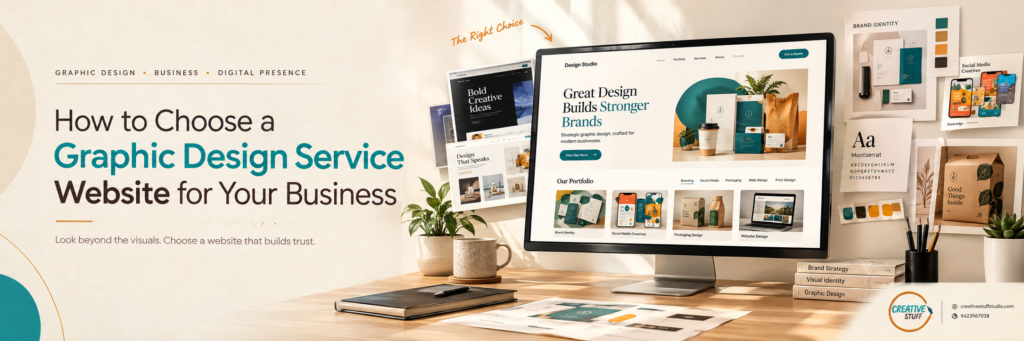
For example, Creative Stuff Studio presents graphic design and creative solutions for businesses looking for support across branding, marketing, digital content, and other visual communication requirements.
Questions to Ask Before Hiring a Graphic Design Service
Before contacting a designer, it helps to define your own requirements.
Consider:
- What exactly needs to be designed?
- Where will the design be used?
- Who is the target audience?
- Do you already have brand guidelines?
- Do you need one design or ongoing support?
- Do you need both digital and print files?
- What is your expected timeline?
- What is your budget?
The clearer your requirements are, the easier it becomes for a designer to provide an appropriate solution.
Final Thoughts
A graphic design service website is more than an online portfolio.
It is an opportunity for a designer or creative studio to demonstrate how they think, communicate, organize information, and present their own brand.
When searching for a design partner, don’t choose solely based on the appearance of a few portfolio pieces.
Look at the complete picture: their portfolio, services, process, communication, industry experience, and ability to understand your business objectives.
Ultimately, good graphic design is not simply about making something look attractive. It is about using visual communication to solve a problem, communicate a message, and create a consistent experience for the audience.