In a competitive digital marketplace, businesses have only a few moments to make an impression. Before a potential customer reads a website, compares products, or contacts a company, they often interact with its visual identity first.
A logo, social media post, advertisement, website banner, brochure, packaging, or presentation can influence how people perceive a business. This is where a professional graphic design service becomes valuable.
Graphic design is not simply about making something look attractive. Good design combines creativity, communication, visual hierarchy, branding, and usability to help businesses present their message more effectively.
What Is a Graphic Design Service?
A graphic design service involves creating visual communication materials for a business, brand, organization, or individual.
Depending on the business’s requirements, graphic design can include:
- Logo and identity design
- Social media creatives
- Brochures and flyers
- Posters and banners
- Business cards and stationery
- Presentation and pitch deck design
- Digital advertisements
- Website graphics
- Packaging design
- Marketing collateral
- Event and promotional designs
The exact requirements differ from business to business. A startup may need a complete visual identity, while an established company may need ongoing marketing creatives for social media and advertising.
The goal is not simply to create attractive visuals. The goal is to communicate the right message to the right audience.
Why Does Graphic Design Matter for Businesses?
Visual communication plays an important role in how customers understand and remember a brand. Consistent use of colors, typography, imagery, layouts, and other visual elements can make a business easier to recognize and can contribute to a more professional brand presence.
Professional design can help businesses in several ways.
1. Creates a Strong First Impression
Your visual presentation is often one of the first things a potential customer notices.
Imagine two businesses offering similar services. One has a clear, professional website, consistent social media graphics, and polished marketing materials. The other uses inconsistent colors, low-quality images, and different design styles across every platform.
Even before comparing their services, customers may form different perceptions of the two businesses.
A well-planned graphic design system helps a business make a stronger and more consistent first impression.
2. Builds Brand Recognition
Brand recognition does not come from a logo alone.
Colors, fonts, photography styles, illustrations, layouts, icons, and other design elements all contribute to a recognizable visual identity. When these elements are used consistently, customers can begin associating them with a particular business.
For example, a customer may recognize a social media post as belonging to a particular brand even before seeing its logo.
This is one reason businesses should think about graphic design as part of their overall branding strategy rather than as a collection of individual designs.
3. Makes Communication Easier
Businesses often need to communicate complicated information quickly.
A graphic designer can organize information using typography, spacing, visual hierarchy, icons, illustrations, charts, and imagery.
For example, instead of presenting ten lines of text about a product’s features, a well-designed graphic can organize those features into clear sections that are easier to scan.
Good design therefore does not only improve appearance. It can improve communication.
4. Supports Marketing and Advertising
Graphic design is closely connected to marketing.
Social media campaigns, digital advertisements, promotional offers, email campaigns, brochures, and other marketing activities all require visual assets.
A marketing campaign can have a strong strategy, but poorly designed creative assets may make it difficult to communicate the campaign message effectively.
Professional design ensures that the headline, imagery, call-to-action, branding, and other elements work together rather than competing for attention.
Graphic Design vs. Branding: Are They the Same?
Graphic design and branding are related, but they are not exactly the same.
Branding defines how a business wants to be perceived. It can involve positioning, personality, messaging, values, visual identity, and the overall customer experience.
Graphic design is one of the tools used to visually communicate that identity.
For example, a brand strategy may establish that a company should feel modern, approachable, and premium. Graphic design then translates those characteristics into visual elements such as typography, colors, imagery, layouts, and marketing materials.
This is why businesses often benefit from combining branding and graphic design rather than treating every design project as an isolated task.
What Should You Look for in a Graphic Design Service?
Choosing a designer or design agency should not be based only on whether you like their portfolio.
Before hiring a graphic design service, businesses should consider several factors.
Portfolio and Design Experience
Look at previous projects and see whether the designer has experience working on projects similar to yours.
A strong portfolio should demonstrate versatility as well as consistency.
Understanding of Your Business
A designer should understand your target audience, industry, competitors, objectives, and brand personality before creating important visual assets.
Design without context can look attractive but fail to communicate effectively.
Consistency
If you need multiple designs, ask how the designer will maintain consistency across different platforms.
Your website, social media, advertisements, print materials, and presentations should feel like they belong to the same brand.
Digital and Print Knowledge
Different formats have different technical requirements.
A social media graphic, billboard, brochure, website banner, and packaging design cannot simply use the same file and specifications.
A professional designer should understand formats, dimensions, resolution, typography, and print requirements.
Communication and Process
A good design process should include discussion, research, concept development, feedback, revisions, and final delivery.
Clear communication can prevent misunderstandings and make the project more efficient.
When Should a Business Hire a Graphic Designer?
Businesses often assume they only need professional design when launching a new brand. In reality, graphic design can be useful throughout different stages of business growth.
A startup may need:
- Logo design
- Brand identity
- Business stationery
- Website graphics
- Social media templates
- Launch campaign creatives
An established business may need:
- Advertising creatives
- Social media campaigns
- Product brochures
- Presentations
- Packaging
- Promotional materials
- Event graphics
Businesses experiencing rapid growth may also need a design system that allows their internal teams and marketing partners to create consistent content more efficiently.
Why Consistency Is More Important Than Creating More Designs
One common mistake businesses make is focusing on quantity rather than consistency.
Creating dozens of different social media designs does not necessarily create a stronger brand.
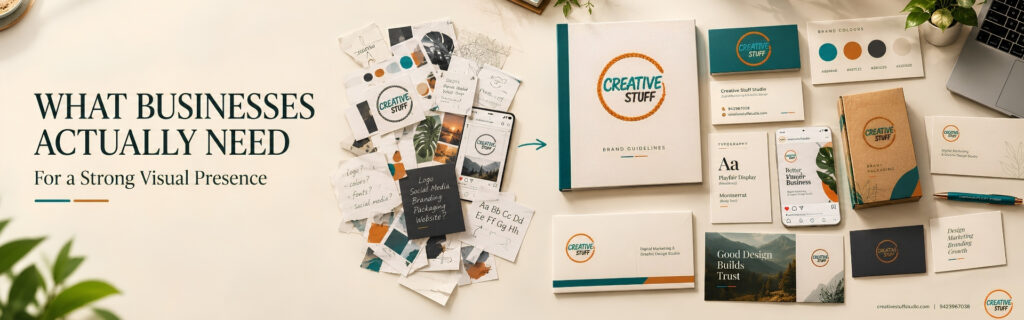
Instead, businesses should develop a recognizable visual system.
This might include:
- A defined color palette
- Primary and secondary fonts
- Consistent image treatments
- Reusable layouts
- Brand-specific graphic elements
- Clear typography hierarchy
- Consistent logo usage
Once these elements are established, creating new marketing materials becomes easier while maintaining a consistent brand appearance.
How Professional Graphic Design Can Support Business Growth
Graphic design does not replace a good product, marketing strategy, or customer experience. However, it can strengthen the way those things are communicated.
Professional design can help a business:
- Present its products and services more clearly
- Establish a recognizable visual identity
- Improve the consistency of marketing materials
- Communicate information more effectively
- Create a professional appearance
- Differentiate itself from competitors
- Adapt its visual identity across different platforms
For businesses looking for a structured approach to visual communication, working with a professional graphic design service can provide access to design expertise without having to manage every creative requirement internally.
Final Thoughts
Graphic design is much more than decoration. It is a form of visual communication that helps businesses explain who they are, what they offer, and why customers should pay attention.
From branding and social media to advertising and print materials, every visual touchpoint contributes to the overall perception of a business.
The right graphic design service should therefore focus on more than producing attractive graphics. It should understand the business objective, target audience, brand identity, and communication requirements behind every design.
When creativity is combined with strategy and consistency, graphic design becomes a valuable business asset rather than simply an aesthetic addition.